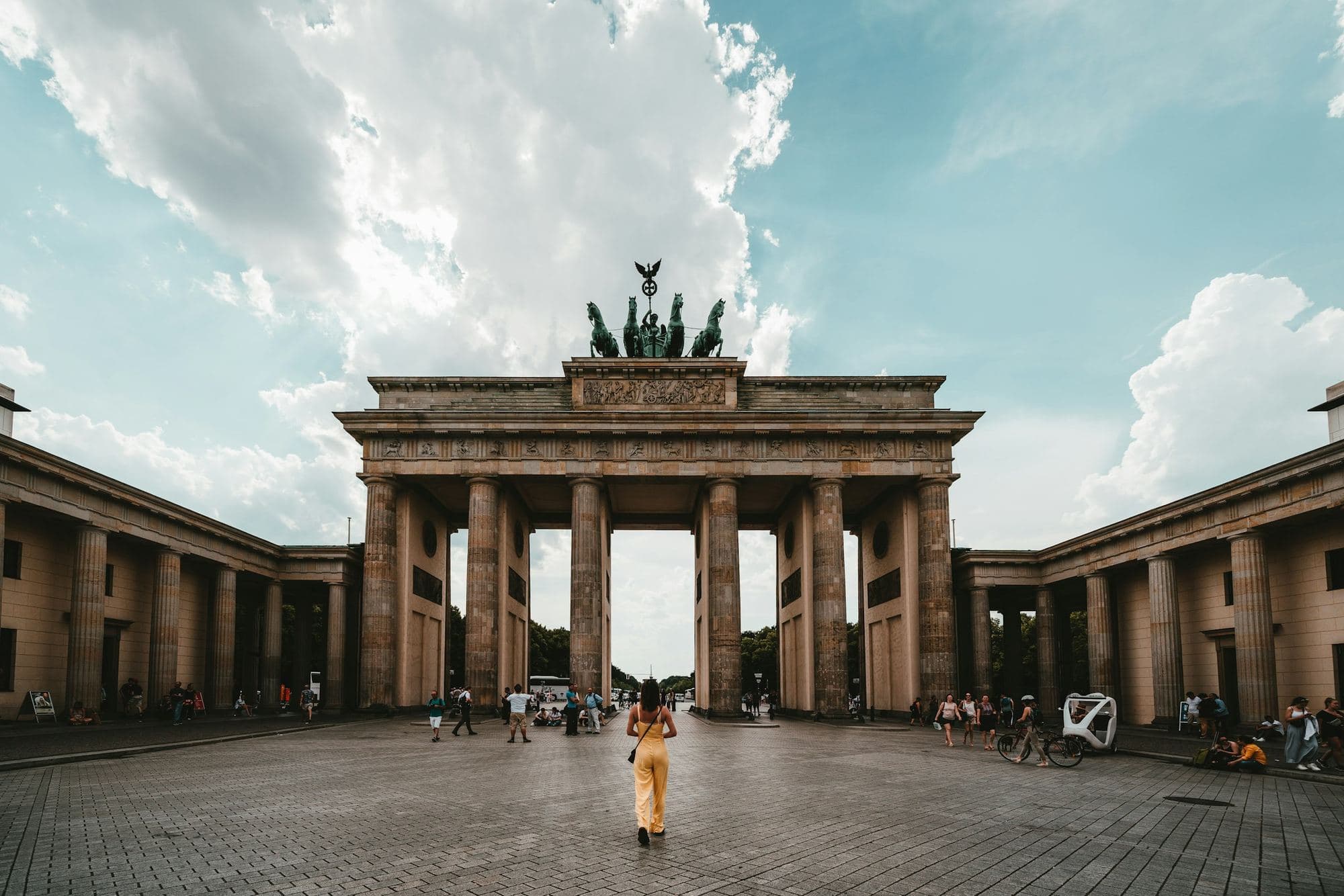
Germany
An overview to prepare your move
A deep job market, solid salaries, an easier EU Blue Card since the 2023 reform, and the €49 Deutschlandticket that eases the transport budget. Against that: demanding bureaucracy, German quickly essential, and a very tight housing market in Munich, Berlin and Frankfurt.
Our services for Germany
Each service below is adapted to the local procedures of Germany.
Cost of living in Germany
| 1-bed flat, central | €1,300/ month |
|---|---|
| Studio, outside centre | €950/ month |
| Utilities (water, electricity, heating) | €250/ month |
| Transport pass | €49/ month |
| Groceries | €280/ month |
| Restaurant meal, mid-range | €15/ meal |
| Coworking desk | €200/ month |
Estimates for a single person, excluding extras. Sources: national statistics institutes and Rootovia surveys, updated quarterly.
Key administrative procedures
- 1
Anmeldung (address registration)
Done at the Bürgeramt within 14 days of moving in, with the Wohnungsgeberbestätigung signed by the landlord. Without Anmeldung: no full bank account, no tax number, no mobile contract.
- 2
Tax ID and tax class
The Steuer-ID arrives by post after the Anmeldung. The Steuerklasse (I to VI) sets the payroll withholding; the choice matters for couples.
- 3
Mandatory health insurance
Enrolment in a public fund (gesetzliche Krankenversicherung, e.g. TK, AOK) or private depending on status and income. The certificate is required for the residence permit and for hiring.
- 4
Ausländerbehörde appointment
For non-Europeans, the foreigners’ office issues the residence permit. Appointment delays vary widely by city; some accept a request by post or online.
Visa and right to stay
EU/EEA: free settlement. Non-Europeans: the EU Blue Card is the main route for a graduate with an offer — salary threshold lowered since November 2023 (about €45,300 per year, or €41,000 for shortage occupations and recent graduates). The job-seeker visa (Chancenkarte, points-based) allows entry for up to 12 months to look for a job. The student visa allows 140 days of work per year. Degree recognition (Anerkennung) is required for regulated professions (health, law, teaching, skilled trades).
FAQ — Germany
Verified review — Germany
« The list of companies that already sponsor saved me months. Three interviews in five weeks, an offer in Berlin with an EU Blue Card. The debrief after each interview round was worth the plan’s price on its own. »
« Munich is brutal. We first secured a Zwischenmiete to file the Anmeldung, then the real flat a month later. The German-style file they prepared clearly set me apart from the other applicants at group viewings. »

Planning a move? Let's talk.
Describe your situation and we get back to you within 24 working hours with a concrete recommendation.